
Why your laptop isn't a server
tl;dr
Availability, collaboration and scale each rule out running it locally. Cloud computing is renting server time, virtualization is what makes it cheap, and a VPS is your slice.
You wrote a server. It runs on localhost:3000. Why not just build on that?
- Availability. The OS wants to update. You close the lid. You want the memory back for a game. A server's core tenet is being up 100% of the time, and if your page is down it's costing you users and money.
- Collaboration. How does anyone else run it? Copy the file around and iterate in parallel? That gets messy immediately.
- Scale. Buy more laptops?
And real setups are never one server. There are redundancies — failover, power outages, updates. Half the fleet goes down for a patch while the other half keeps answering — that pattern has a name, red/green, and it's one of several update strategies. That whole world of server management is normally invisible to frontend engineers.
Cloud computing is a rental agreement
Ten years ago you could get away with a server rack in the company basement, and plenty of firms still do — Goldman Sachs and the like keep them in the fire-resistant part of the building, because servers run hot.
What replaced it isn't complicated, despite the branding. Cloud computing is the idea that there's a giant pile of servers somewhere and you can rent time on it. AWS, DigitalOcean, Rackspace. That's the whole concept — you're outsourcing to people who do this better than you, instead of hiring a sysadmin.
Virtualization is the trick that made it cheap
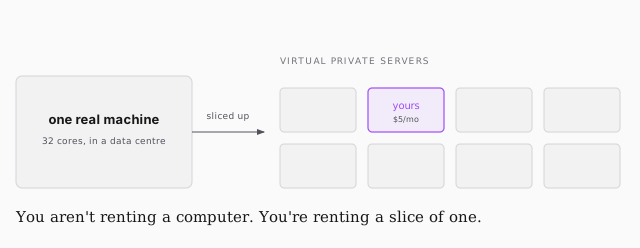
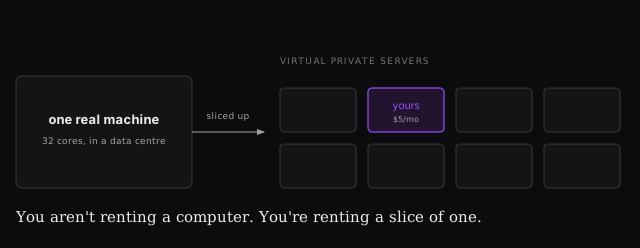
Dividing a machine's resources into virtual computers sounds obvious now, and it was genuinely hard. Computers were built for multiprocessing and multithreading; pinning one thread to one core was foreign to them. Early cloud computing was bumpy for exactly this reason, and it took processors designed for virtualization to smooth it out.
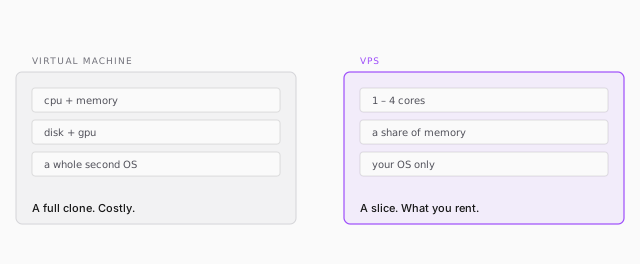
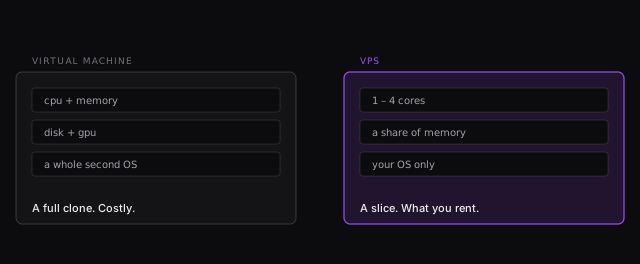
Nearly every modern web application runs on a VPS. Facebook is a notable exception, running its own hardware, but that's a different scale of problem.