
TCP, UDP and packets
tl;dr
TCP shakes hands, counts, and resends what got lost. UDP throws data and doesn't look. Which one you want depends entirely on whether a missing piece matters.
Two protocols carry almost everything, and the difference between them is one question: does it matter if a piece goes missing?
TCP shakes hands first
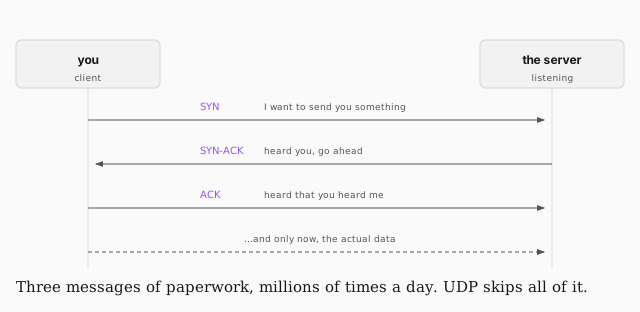
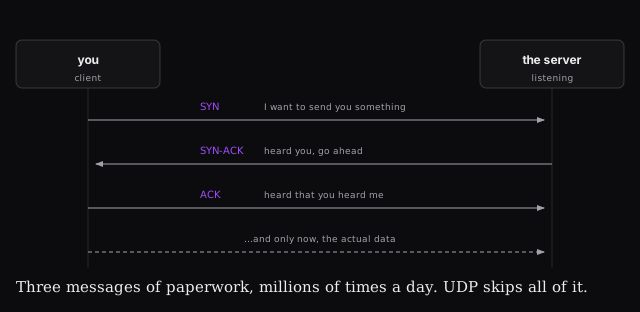
TCP — Transmission Control Protocol — exists because the internet is unreliable. Twenty hops to Google, any of which can drop, reroute, or accept traffic in one direction but not the other. Something has to guarantee the reply finds its way back.
So TCP confirms delivery and retries what's missing until the transfer is complete. That reliability costs round trips, and it happens millions of times a day beneath everything you do.
UDP throws it and walks away
UDP — User Datagram Protocol — has no handshake and no acknowledgement. It sprays data at you and assumes it lands.
| TCP | UDP | |
|---|---|---|
| Guarantees delivery | yes | no |
| Reassembles in order | yes | no |
| Speed | slower | faster |
| Bandwidth | heavier | lighter |
| Use it for | web pages, files | live video, live audio |
The trade is obvious once you see the use case. A web page needs every byte in order or it doesn't render — TCP. Streaming video doesn't: dropping a few frames is fine, and replaying one late frame would be worse than skipping it. Running video over TCP works, but the bandwidth cost is high for a guarantee you don't need.
That momentary blur on a video call is UDP doing exactly what it promised.
ICMP, and how it got abused
ICMP — Internet Control Message Protocol — carries no data. It just asks
"are you there?". ping and traceroute are both ICMP.
Everything here moves as packets — the smallest unit that travels over a network. Splitting a 10 GB file into kilobyte chunks, labelling them, and reassembling them in order is a standard of its own, and worth weeks of study on its own terms.
All of it rests on TCP/IP, which every piece of networking hardware on earth agrees to implement, without anyone having been made to.