
DNS and URLs
tl;dr
DNS is the phone book: names in, IP addresses out. Two lookups happen before a page loads, and the URL you typed has more structure than you think.
You know an IP address gets you to a machine. So how does google.com?
The domain name system is a phone book. Instead of memorising an address, you remember a name, and something translates. The machines holding those records are nameservers — independent operators that share records with each other, which is how a domain you buy from one company becomes reachable through everyone else's.
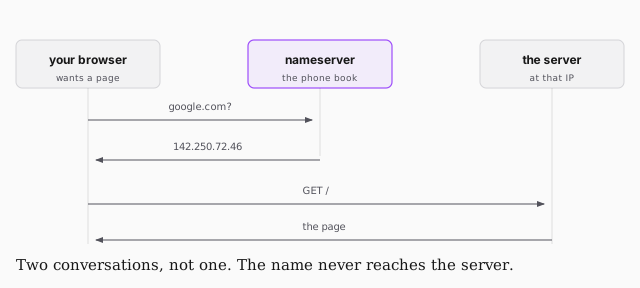
Without this the internet wouldn't have got far. Nobody memorises addresses.
Two record types
- A record — maps a name to an IP address. This is the one you'll use.
- CNAME — maps a name to another name, so you can point several domains at the same place without a new IP.
See it yourself
nslookup frontendmasters.com    # which nameservers, and some IPs
dig frontendmasters.com         # the actual DNS records, more verbose
Paste one of those IPs into your browser and you'll land on the site.
You'll notice a domain returns several addresses. Almost no commercial site runs on one server — they're load balanced and fronted by CDNs, and the extra addresses are there for resilience as much as for scale.
The anatomy of a URL
URL stands for Uniform Resource Locator — it says where something is, and nothing more. It also has rules, like everything else here.
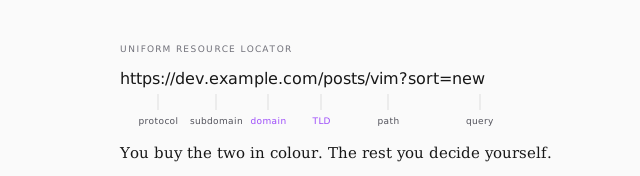
The TLD is the interesting one. .com used to be effectively the only
option, governed by ICANN, and a slice of every domain purchase funds the
system that keeps this working. Then companies started buying their own: Google
owns .google. Now there's .science, .best, and a long tail of the strange.
The ugly side of names
That explosion has consequences. Every time a new TLD launches, companies immediately buy the insulting variants of their own name so nobody else can.
Two attacks worth recognising:
- Lookalike domains —
netf1ix.comwith a one,micros0ft.comwith a zero, a cloned homepage, and a login form that harvests credentials. - Plausible subdomains — a
help.prefix on a domain that looks official enough to a relative who isn't reading closely.
Cybersquatting is registering a name you have no use for, to sit on it. But
the line is genuinely blurry, and Jem's example is the good one: toyota.com
originally belonged to a mechanic whose surname was Toyota. Legitimate use, got
there first — and then sued by a car company with twenty lawyers. ICANN
arbitrates these, and it does not always land where "finders keepers" would.